

TL;DR:
- AI-driven ad campaigns can significantly increase leads and return on ad spend for local businesses.
- The best platforms are Google Ads for high-intent searches and Meta for brand awareness.
- Focusing on targeted measurement and AI optimization is key to advertising success.
Choosing the right online advertising channel feels like standing in front of a wall of switches with no labels. Spend in the wrong place and your budget disappears with nothing to show for it. Spend in the right place, with the right tools, and the results can be dramatic. AI-driven ad campaigns have produced 30 to 340% increases in leads and sales for local businesses, along with 200% improvements in return on ad spend. This guide breaks down exactly which platforms work best for Southern California businesses, how AI changes the game, and how to measure every dollar you put in.
Table of Contents
- How to choose the right online advertising channels
- The best performing ad platforms for Southern California businesses
- Leveraging AI and automation in online advertising
- Measuring results and optimizing your ad campaigns
- Our take: The overlooked edge in local online advertising
- Grow your business with expert digital advertising solutions
- Frequently asked questions
Key Takeaways
| Point | Details |
|---|---|
| Smart platform selection | Choosing the right ad channels is crucial for maximizing impact and ROI on a local scale. |
| AI boosts performance | AI tools can increase leads and returns dramatically, often by 30-340% within weeks. |
| Continuous optimization | Measuring and refining campaigns regularly is essential for sustained online advertising success. |
| Local targeting advantage | Platforms with robust local targeting unlock higher engagement for Southern California SMBs. |
How to choose the right online advertising channels
Not every platform deserves your budget. The first question to ask is: where are your customers when they are ready to buy? That single question narrows your options fast.
Here are the key criteria to evaluate any ad platform before you commit:
- Search intent vs. awareness: Google Ads reaches people actively searching for your service. Meta Ads (Facebook and Instagram) reach people who may not know you exist yet.
- Local targeting depth: Can the platform target by ZIP code, neighborhood, or radius? For a plumber in Pasadena or a salon in Irvine, this matters enormously.
- Budget flexibility: Some platforms require higher minimum spends to generate meaningful data. Others let you start small and scale.
- AI optimization tools: Platforms with built-in machine learning adjust bids and placements automatically, which saves time and improves results.
- Audience data quality: The more precise the audience data, the less you waste on clicks from people outside your service area.
Prioritize Google Ads for high-intent searches and Meta for building awareness, but integrate AI for optimization and test iteratively to avoid over-reliance on any single channel. A business that puts 100% of its budget into one platform is one algorithm update away from a crisis.
Using AI tools for marketing success alongside your channel mix helps you identify which combinations drive the most qualified leads. Pair that with solid lead generation strategies built for Southern California markets and you have a real system, not just a guess.
Pro Tip: Before launching any campaign, define one primary goal per platform. Google Ads for phone calls or form fills. Meta for video views or page follows. Mixing goals on a single platform makes it nearly impossible to measure what is working.
The best performing ad platforms for Southern California businesses
Once you know what to look for, it is time to compare the actual platforms. Each one has a distinct strength, and knowing those strengths helps you allocate budget with confidence.
| Platform | Best for | Targeting strength | AI optimization |
|---|---|---|---|
| Google Ads | High-intent buyers | Keywords, location, device | Smart bidding, Performance Max |
| Meta Ads | Brand awareness, retargeting | Demographics, interests, lookalikes | Advantage+ campaigns |
| Local display networks | Geo-specific visibility | Hyper-local placements | Limited but growing |
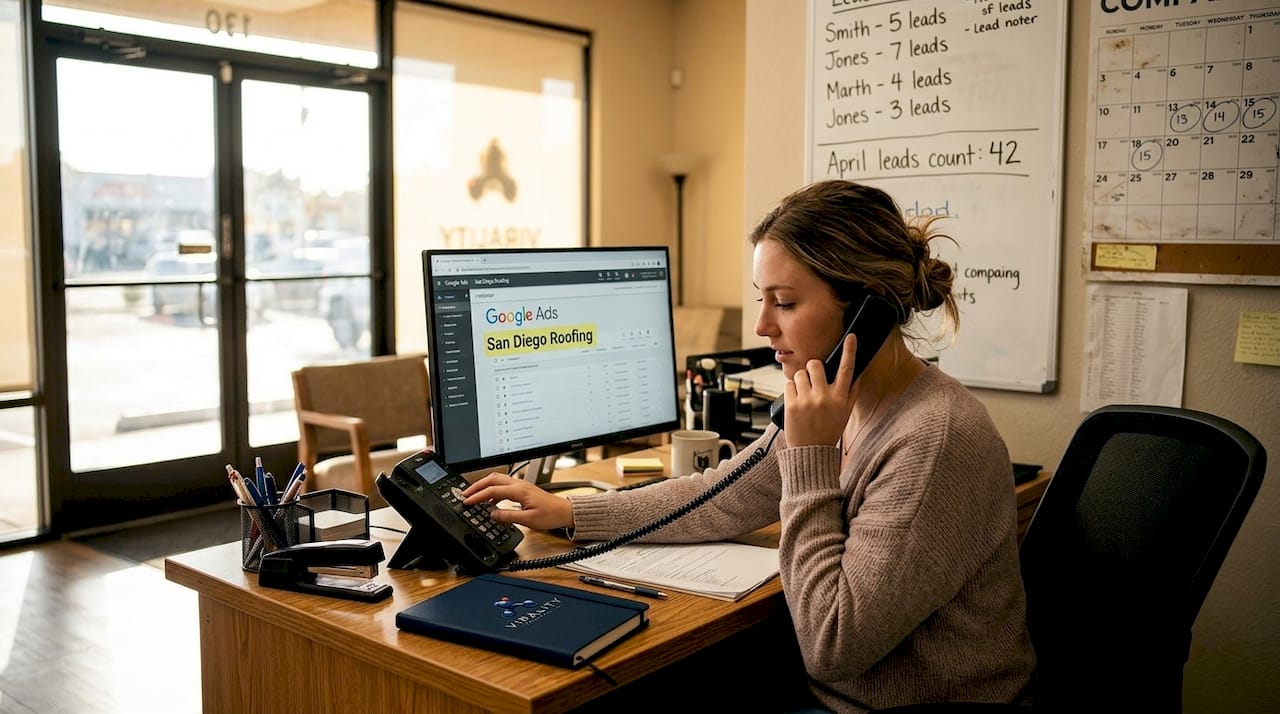
Google Ads is the strongest option when someone is actively searching for what you sell. A roofing company in San Diego, a dentist in Long Beach, or a gym in Burbank all benefit from showing up at the exact moment a potential customer types a relevant query. The conversion rates tend to be higher because the intent is already there.
Meta Ads shine when you want to build recognition before someone is ready to search. Video ads, carousel formats, and retargeting sequences keep your brand visible to people who visited your website or engaged with your content. For restaurants, retail, and service businesses with strong visual appeal, Meta is hard to beat.
Local display networks serve banner and video ads across websites and apps in specific geographic areas. They are useful for reinforcing brand presence, especially when combined with a search campaign. Think of them as billboards in the digital space.
The most compelling data point: AI-optimized campaigns have delivered up to 340% more leads within just six weeks for local businesses. That kind of result is not typical of manual campaign management.
Understanding AI trends in local marketing helps you stay ahead of competitors still running campaigns the old way. For a practical look at boosting local business visibility through paid channels, the strategies are more accessible than most owners realize. If you want a full breakdown of your PPC advertising options, that resource covers the technical side in detail.
Leveraging AI and automation in online advertising
AI is not a buzzword here. It is a practical toolkit that changes how campaigns are built, managed, and improved over time. Here are the three core ways AI transforms your advertising results.
- Smarter targeting: AI analyzes behavioral signals, search patterns, and purchase history to identify your most likely customers. Instead of guessing who to show your ad to, the system learns from real data and narrows in on high-value audiences automatically.
- Automated bidding: Manual bidding requires constant monitoring. AI-powered bidding strategies adjust your bids in real time based on the likelihood of a conversion, the time of day, the device being used, and dozens of other signals. You get more conversions for the same budget.
- Creative testing at scale: AI runs A/B tests (comparing two versions of an ad to see which performs better) across headlines, images, and calls to action simultaneously. What used to take weeks of manual testing now happens in days.
Here is how AI-managed campaigns compare to manual approaches:
| Metric | Manual campaigns | AI-optimized campaigns |
|---|---|---|
| Lead volume increase | 5 to 15% | 30 to 340% |
| ROAS improvement | Minimal | Up to 200% |
| Sales lift | Marginal | Up to 35% |
| Time to optimize | Weeks | Days |
The 200% ROAS improvement seen in AI-driven campaigns is not accidental. It reflects the compounding effect of better targeting, smarter bidding, and faster creative iteration working together.
Understanding why AI optimization matters is the first step. The next step is putting it into practice through AI implementation services that are built for local business workflows.
Pro Tip: Start with a small daily budget, around $10 to $20 per day, and let the AI gather data for two to three weeks before scaling. Scaling too fast before the algorithm has enough data leads to wasted spend.
Measuring results and optimizing your ad campaigns
Running ads without tracking results is like driving with your eyes closed. You need a clear system for measuring what matters and acting on what you find.
Here is a step-by-step process for tracking and improving your campaigns:
- Set up conversion tracking first. Before you spend a dollar, make sure your website or landing page is tracking the actions that matter: phone calls, form submissions, purchases, or appointment bookings.
- Define your key metrics. Focus on three numbers: cost per lead (how much you spend to get one inquiry), ROAS (return on ad spend, meaning how much revenue you earn per dollar spent on ads), and total sales attributed to ads.
- Run structured A/B tests. Change one variable at a time. Test a different headline, then a different image, then a different call to action. Changing multiple things at once makes it impossible to know what moved the needle.
- Review weekly, optimize monthly. Check performance weekly to catch problems early. Make strategic adjustments monthly based on trends, not daily fluctuations.
- Let AI handle micro-optimizations. Use your time for strategy. Let the platform’s AI handle bid adjustments, audience refinements, and placement decisions.
“A 35% sales lift from online ads with AI optimization shows what is possible when measurement and machine learning work together.”
For a practical walkthrough of the full process, the digital advertising step-by-step guide covers setup through optimization in plain language built for small business owners.
The businesses that grow fastest are not the ones with the biggest budgets. They are the ones that measure relentlessly and adjust quickly.
Our take: The overlooked edge in local online advertising
Most local businesses we work with come to us running broad campaigns with vague targeting and no real measurement system. They are spending money, but they have no idea if it is working. That is the most common and most fixable problem in local advertising.
The real edge is not a secret platform or a magic budget number. It is the combination of high-intent targeting, AI-powered optimization, and consistent local customization. A campaign built specifically for Torrance is going to outperform a generic Southern California campaign every time. Specificity wins.
Even modest budgets, when paired with smart AI tools, can produce outsized returns. We have seen businesses with $500 monthly ad budgets outperform competitors spending five times more, simply because their targeting was tighter and their measurement was sharper.
The businesses that break through in Southern California are the ones that treat advertising as a system, not a one-time experiment. Using AI tools for SMBs as part of that system is no longer optional. It is the baseline for staying competitive.
Grow your business with expert digital advertising solutions
At Virality Creative, we help Southern California businesses turn advertising budgets into measurable growth. Whether you are just starting with paid ads or looking to improve campaigns that are not delivering, our team combines channel expertise with AI-driven strategy to get real results. Explore our marketing consulting services to build a plan that fits your goals and budget. Our AI optimization services take the guesswork out of bidding and targeting. And if social media is part of your mix, our social media workflow optimization keeps your content and ads working together seamlessly.
Frequently asked questions
How can AI improve my online advertising results?
AI targets ideal customers, automates bid adjustments, and continuously refines your campaigns, with case studies showing up to 340% more leads generated within weeks of implementation.
What are the best platforms for local businesses in Southern California?
Google Ads and Meta are the top choices: Google for high-intent searches and Meta for building brand awareness and retargeting warm audiences.
How can I track return on ad spend (ROAS)?
Set up conversion tracking on your website, then use your ad platform’s reporting tools to calculate revenue per dollar spent. AI-managed campaigns have achieved 200% ROAS improvement compared to manual management.
How can small businesses maximize ad budgets?
Start with small test budgets, let AI gather performance data before scaling, and test iteratively to identify what works before committing larger spend to any single channel.


