

Managing social media for your local business shouldn’t feel like a second full-time job. Yet many Southern California business owners find themselves trapped in a cycle of sporadic posting, minimal engagement, and unclear results. Despite 91% of small businesses using social media, most struggle to turn followers into customers. This guide walks you through building a streamlined social media management workflow that delivers consistent engagement, saves time, and amplifies your local visibility. You’ll learn practical steps to plan, execute, and refine your approach for measurable business growth.
Table of Contents
- Key takeaways
- Understanding the challenges in social media management
- Preparing your social media management workflow: tools and planning
- Executing your social media workflow step by step
- Verifying and improving your social media management workflow
- Enhance your social media workflow with expert help
- FAQ
Key Takeaways
| Point | Details |
|---|---|
| Structured workflow | A structured social media workflow creates repeatable processes that deliver consistency, quality, and measurable results. |
| Regular planning and analysis | Regular planning, execution, and analysis help boost visibility and conversions over time. |
| Use the right tools | Choose scheduling, analytics, and design tools that fit your team and commit to using them consistently. |
| Clear roles and calendar | Define team responsibilities and maintain a 30 day content calendar to guide posting and accountability. |
Understanding the challenges in social media management
High adoption rates don’t equal success. While 91% of small businesses use social media, many fail to attract new customers effectively because they lack a systematic approach. You might recognize these struggles: posting whenever you remember, creating content without strategy, or ignoring comments for days. These patterns kill engagement and waste your marketing budget.
Time constraints hit local business owners hardest. Between managing operations, serving customers, and handling finances, social media often becomes an afterthought. You know it matters, but finding hours each week to create posts, respond to messages, and analyze performance feels impossible. This reactive approach leads to inconsistent brand presence and missed opportunities to connect with your Southern California community.
Resource limitations compound the problem. Small teams wear multiple hats, and few have dedicated social media management expertise. Without clear processes, even motivated staff struggle to maintain quality standards. Common pain points include:
- Unclear content strategy leading to random, disconnected posts
- No system for tracking what works and what doesn’t
- Inconsistent brand voice across different platforms
- Failure to respond to customer inquiries promptly
- Difficulty measuring actual business impact from social efforts
A structured workflow solves these challenges by creating repeatable processes. Instead of reinventing your approach each week, you follow proven steps that ensure consistency, quality, and measurable results. The right system transforms social media from a time drain into a reliable customer acquisition channel.
Preparing your social media management workflow: tools and planning
Successful workflows start with proper foundation work. Select tools that match your business size and goals rather than chasing every shiny platform. You need three core capabilities: content scheduling, performance analytics, and visual creation. Popular options include Buffer for scheduling, native platform analytics for data, and Canva for graphics. Choose tools you’ll actually use consistently rather than complex systems that overwhelm your team.

Content planning prevents the panic of last-minute posting. Map out themes that resonate with your Southern California audience, like local events, seasonal trends, and community stories. Video content deserves special attention since 52% of small businesses post video weekly to boost engagement. Plan a mix of educational posts, behind-the-scenes content, customer spotlights, and promotional messages. This variety keeps your feed interesting while serving different audience needs.
Team roles clarify who does what. Even small operations benefit from defined responsibilities. Assign content creation, scheduling, community management, and reporting to specific people. If you’re a solo operator, batch similar tasks together. Create all graphics on Monday, write captions Tuesday, schedule posts Wednesday. This approach maximizes efficiency and maintains quality standards.
Your content calendar acts as the workflow backbone. Map out 30 days at minimum, noting holidays, local events, and business promotions. Include post types, platforms, and publishing times. This bird’s-eye view reveals gaps and prevents redundancy. Update your calendar weekly based on performance data and emerging opportunities.
Pro Tip: Dedicate one afternoon monthly to batch-create content. Shoot multiple videos, write several weeks of captions, and design graphics in bulk. This concentrated effort produces better quality than rushed daily creation and frees time for engagement and analysis.
Compare platforms and tools strategically:
| Platform/Tool | Best For | Key Benefit | Consideration |
|---|---|---|---|
| Visual brands, local discovery | High engagement with Stories and Reels | Requires consistent visual quality | |
| Community building, events | Broad demographic reach | Organic reach declining | |
| TikTok | Video-first brands, younger audiences | Viral potential, authentic content | Time-intensive content creation |
| Buffer | Multi-platform scheduling | Simple interface, affordable | Limited analytics depth |
| Hootsuite | Enterprise teams | Comprehensive features | Steeper learning curve |
Integrate digital marketing services thinking into your planning phase. Consider how social media connects to your broader marketing goals. Your workflow should support website traffic, local SEO, and customer retention, not exist in isolation. Professional marketing consulting can help align these elements for maximum impact.
Executing your social media workflow step by step
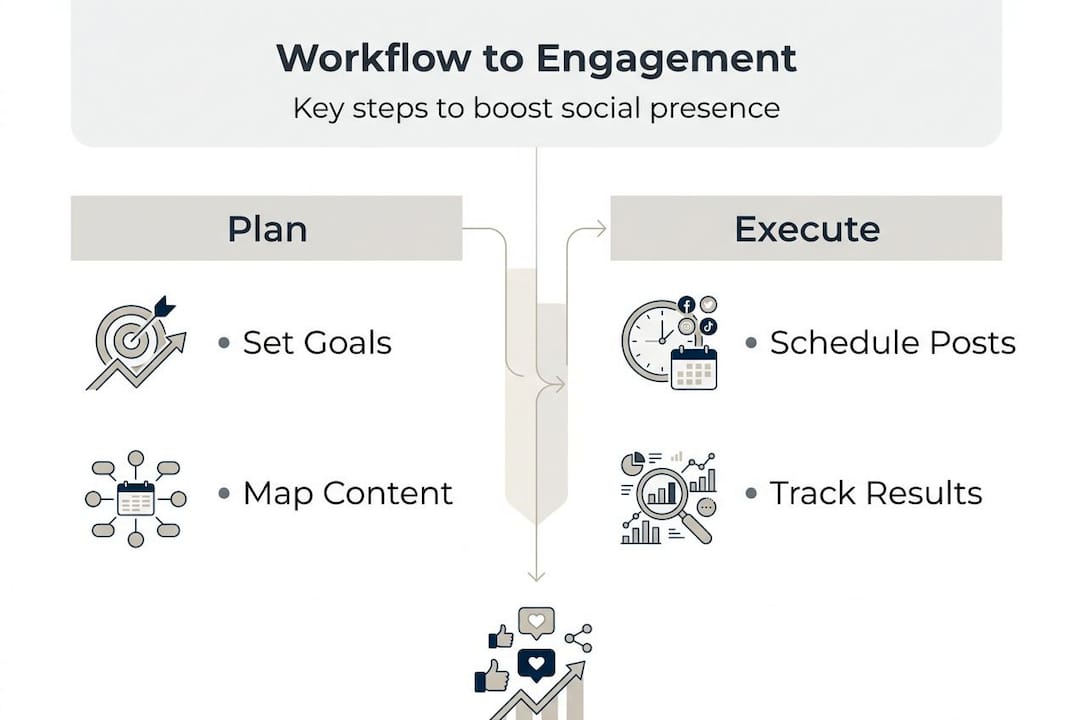
Execution transforms plans into results through consistent action. Follow these four steps to maintain momentum and quality:
Develop content aligned to your brand and audience needs. Start with your content calendar but stay flexible for timely opportunities. Create posts that educate, entertain, or inspire rather than constantly selling. Share customer success stories, industry tips, and local community involvement. Your Southern California audience wants authentic connection, not polished corporate speak. Include clear calls to action that guide followers toward your business goals.
Schedule posts using automation tools to maintain consistent presence. Load your week’s content into your scheduling platform every Sunday evening. Aim for optimal posting times when your audience is most active, typically mornings and early evenings. Consistency matters more than frequency. Three quality posts weekly beats seven rushed ones. Automation ensures you maintain presence even during busy periods, but never set and forget. Review scheduled content daily for relevance.
Monitor engagement actively and respond to comments promptly. Check notifications multiple times daily. Reply to comments within hours, not days. Answer questions thoroughly and thank people for positive feedback. Address concerns professionally and move complex issues to direct messages. This active engagement signals that real humans run your business and care about customer experience. It also boosts algorithmic visibility as platforms reward responsive accounts.
Analyze post performance metrics to refine future content. Review analytics weekly to identify patterns. Which post types generate the most engagement? What times drive best results? Which topics resonate strongest? Track follower growth, engagement rate, link clicks, and conversions. Use these insights to adjust your content calendar and double down on what works. Since 71% of small businesses use social media to attract customers, measurement separates successful campaigns from wasted effort.
Pro Tip: Create a simple spreadsheet tracking your top five posts each month by engagement rate. Note the content type, topic, and posting time. After three months, clear patterns emerge that guide your strategy with data rather than guesswork.
Understand when organic posting works versus when paid promotion makes sense:
| Approach | Best Use Cases | Typical Results | Investment Required |
|---|---|---|---|
| Organic Posts | Building community, sharing updates, customer service | Steady engagement with existing followers | Time and content creation |
| Paid Promotion | Reaching new audiences, promoting offers, event awareness | Rapid visibility increase, measurable conversions | Ad budget plus management time |
| Hybrid Strategy | Sustainable growth combining both methods | Balanced reach and engagement | Moderate budget with strategic boost |
Integrate lessons from effective social media campaigns into your execution. Study what works for similar Southern California businesses and adapt those tactics to your brand. Your workflow should evolve based on real-world results, not theoretical best practices. Professional social media management services can accelerate this learning curve by bringing proven strategies to your business.
Verifying and improving your social media management workflow
Measurement turns activity into strategy. Track key performance indicators monthly to understand what drives business results. Focus on metrics that matter: engagement rate shows content resonance, follower growth indicates brand awareness expansion, and conversion rate reveals actual business impact. The average conversion rate of 3% for social media marketing provides a benchmark, but your specific industry and approach will vary.
Common mistakes sabotage even well-planned workflows. Inconsistent posting confuses your audience and hurts algorithmic visibility. Ignoring analytics means repeating failures and missing opportunities. Overly promotional content drives followers away. Broadcasting without engaging creates one-way communication that audiences tune out. Copying competitors without adapting to your unique brand voice makes you forgettable.
Avoid these workflow killers:
- Posting only when convenient rather than following your schedule
- Creating content without reviewing what previously performed well
- Ignoring negative comments or deleting criticism instead of addressing concerns
- Changing strategy every week based on trending tactics rather than your data
- Measuring vanity metrics like follower count while ignoring engagement and conversions
- Skipping the planning phase and reverting to reactive posting
AI tools and professional services optimize ongoing results. AI optimization can automate content suggestions, optimal posting times, and performance predictions. These technologies save hours while improving outcomes. However, human oversight remains essential for brand voice, community management, and strategic decisions. The most effective workflows blend automation efficiency with authentic human connection.
Regular workflow audits keep your system sharp. Quarterly, review your entire process from planning through execution to analysis. Ask tough questions: Are we achieving our goals? What’s working better than expected? Where are we wasting time? Which steps feel forced or skipped regularly? Adjust based on honest answers. Your workflow should serve your business, not become another rigid obligation.
Continuous improvement separates good social media management from great. Test new content formats, experiment with posting times, try different calls to action. Run small experiments and measure results. When something works, scale it up. When something fails, learn why and move on. This iterative approach, informed by data and guided by digital advertising principles, transforms your social presence from static to dynamic.
Enhance your social media workflow with expert help
Building an effective workflow takes time and expertise you might not have. Virality Creative offers marketing consulting specifically designed for Southern California businesses facing these exact challenges. Our team helps you establish systems that work for your specific situation, not generic templates that ignore your unique needs. We handle the complexity while you focus on running your business.
Professional services optimize and automate your social media workflow beyond what most small businesses can achieve alone. Our digital marketing services in Southern California integrate social media with SEO, paid advertising, and content creation for cohesive brand presence. This holistic approach ensures your social efforts support broader business goals rather than existing in isolation.
AI optimization capabilities save hours weekly while improving results. We implement tools that analyze your audience behavior, predict optimal content, and automate routine tasks. You get better performance with less manual effort. Our clients typically see engagement increases within 60 days while reclaiming time for core business activities. Let us handle the technical complexity so you can focus on what you do best.
FAQ
How long does it take to see results from a new social media workflow?
Most businesses notice improved engagement within 60 to 90 days of implementing a structured workflow. Initial changes like consistent posting and better content quality show impact first. Follower growth and conversion improvements take longer, typically three to six months. Patience and consistency matter more than quick wins. Regular adjustments based on your performance data accelerate results over time.
What social media platforms are best for Southern California small businesses?
Facebook, Instagram, and TikTok lead for customer engagement in Southern California markets. Facebook works well for community building and reaching diverse age groups. Instagram excels for visual brands and local discovery through location tags. TikTok captures younger audiences with authentic, video-first content. Choose social media platforms based on where your specific customers spend time rather than trying to maintain presence everywhere.
How often should I post video content on social media?
Weekly video posts are recommended for better engagement and audience growth. Since 52% of small businesses post video weekly, this frequency keeps you competitive without overwhelming your resources. Consistency matters more than quantity. One quality video weekly beats sporadic posting of mediocre content. Videos don’t need expensive production; authentic, helpful content filmed on smartphones performs well when it provides genuine value.
Can small businesses manage social media effectively without hiring experts?
Yes, with the right workflow and tools, small businesses can manage social media independently. The structured approach outlined in this guide provides the framework needed for success. However, professional digital marketing consulting accelerates growth and optimizes efforts significantly. Experts bring experience from hundreds of campaigns, saving you from costly trial and error. Consider starting solo to understand the basics, then bring in professionals when you’re ready to scale results beyond what time and expertise allow.


