

Small businesses in Southern California face a huge challenge. The digital landscape has so many businesses competing for the same consumer that finding ways to differentiate themselves online seems impossible. Consumers have developed habits of searching for local solutions online. Many small business owners see their competitors getting ahead in search engine rankings and dominating the feeds of their favorite social networks.
With the right digital advertising strategies, small businesses no longer need to be limited by budget constraints or rely on corporate-sized marketing teams. With this guide, we will walk you through actionable steps to develop, deploy, and optimize digital advertising campaigns that allow you to reach ready-to-buy consumers with AI-powered strategies and highly targeted methods. The ultimate measure of our success is that you see measurable results from the campaigns.
Table of Contents
- Understanding Your Digital Advertising Foundation
- Step-By-Step Execution Of Digital Advertising Campaigns
- Optimizing & Troubleshooting Your Digital Ad Campaigns
- Measuring Success: Expected Outcomes For Digital Advertising
- How Virality Creative Can Enhance Your Digital Advertising Efforts
- Frequently Asked Questions
Key Takeaways
| Point | Details |
|---|---|
| Level Playing Field | Digital advertising offers small businesses the ability to compete equally with large corporations using precise targeting and budget control. |
| Local SEO Drives Leads | Local Search Engine Optimization (SEO) and listing your business on the map increase visibility to high-intensity consumers who are looking for your services in Southern California. |
| AI Boosts ROI | AI-powered tools enable the automatic optimization of ad spend, targeting, and performance to provide maximum ROI from every dollar spent. |
| Consistency Wins | A consistent presence across Web, Search and Social platforms builds trust with potential customers and capture them during the entire buyer’s journey. |
Understanding Your Digital Advertising Foundation
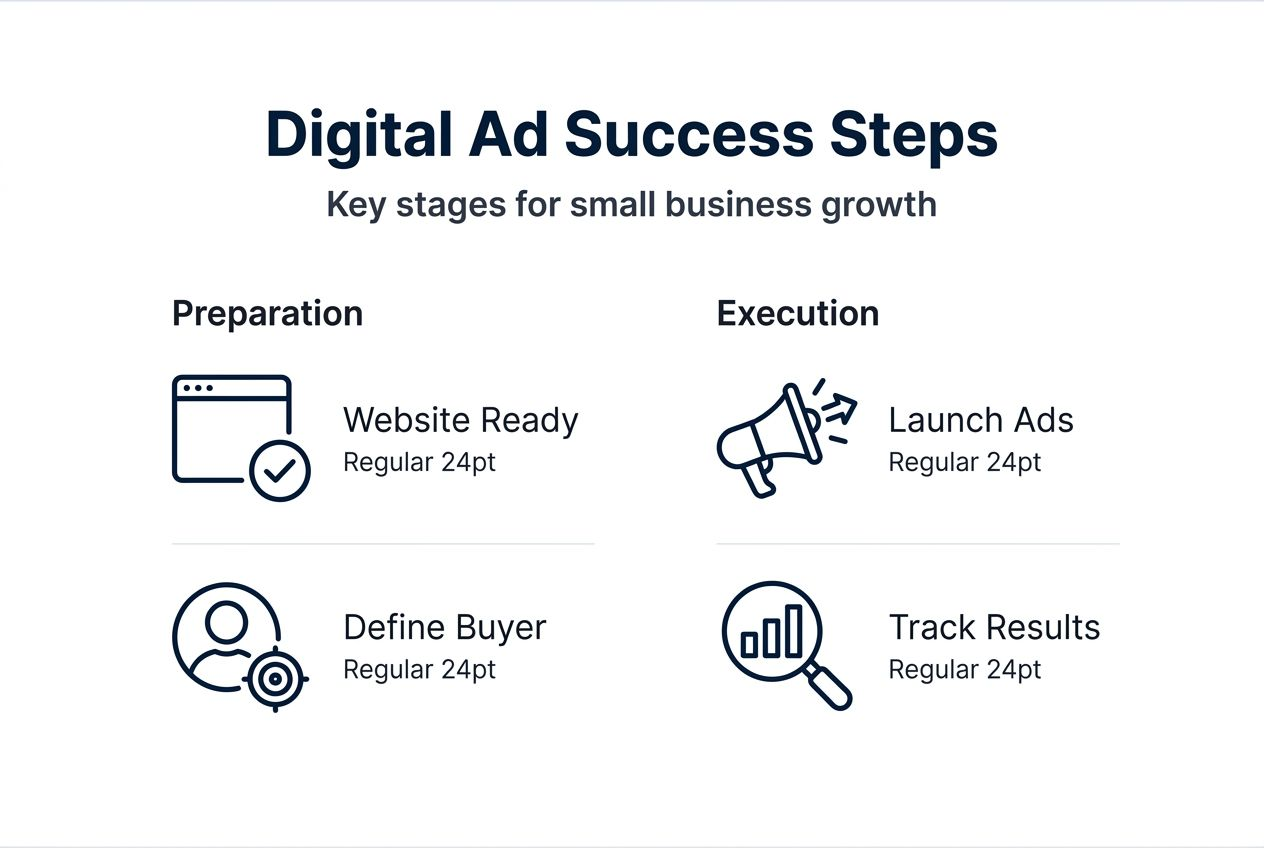
To begin creating campaigns, you must establish a strong foundation. Your website represents the conversion hub where prospects convert to customers. Having a fast, professional, conversion-optimized website represents the difference between losing money on ad spend and making money on your campaigns. Visitors arriving at slow, confusing or outdated websites leave immediately and burn your advertising budget. Relevant support starts with strong website design.
Your second foundation piece is local SEO. Southern California consumers continually perform “near me” searches and look for immediate solutions. Whether your business appears in the map listings depends upon having an optimized Google My Business profile, correct NAP citations in relevant directories, and location-based content. By localizing your optimization, you attract customers that are already prepared to buy and not just browsing casually.
Identifying your target audience limits your risk of wasting advertising dollars on people that will never buy. Rather than sending generic campaigns to anyone and everyone, define specific customer segments based on:
- Demographics: age groups, income levels, family status
- Geographic Zones: specific neighborhoods, cities, etc. and/or radius around your location
- Behavioral Patterns: search history, website visits, purchase signal indicators
- Pain Points: exact problems that your service resolves
Pro Tip: Develop your customer personas thoroughly prior to investing a single dollar in ads. Interview your existing customers to gain insight into their buying process from becoming aware of their problem to ultimately deciding to purchase.
Prior to launching campaigns, collect your digital assets:
- Quality product images
- Product description copy
- Testimonials with specific results
- Clear Calls-To-Action (CTA)
- Pixels to track conversions on your website
These assets transform digital advertising impressions into actual revenue.
Step-By-Step Execution Of Digital Advertising Campaigns
Effective campaigns use a systematic process, not trial-and-error. Begin by developing specific objectives tied to business outcomes. “Get more traffic” is a terrible objective. “Generate 50 qualified leads each month at $30 per lead” creates clear objectives and accountability.
Develop Key Performance Indicators (KPIs) that monitor your campaign’s progression:
- Click Through Rate (CTR): indicates if the ad is performing well
- Cost Per Click (CPC): measures your bidding efficiency
- Conversion Rate: gauges your landing page’s performance
- Customer Acquisition Cost (CAC): measures your campaign’s profitability
- Return On Ad Spend (ROAS): demonstrates the total campaign’s value
AI-Powered Optimization Revolutionizes How Small Businesses Compete
A local bakery was able to double its ROI by utilizing AI-powered optimization to automate its campaign’s performance and adjust bids in real-time. As AI optimizes performance data, it automatically identifies winning audience segments and reallocates budget to top performers. AI removes the need for manual campaign management and allows small businesses to compete on a much larger scale.
Utilize Multiple Platforms Strategically
Google Ads are perfect for capturing high-intention searchers actively seeking solutions. Facebook and Instagram Ads are ideal for awareness-building and retargeting website visitors. LinkedIn is great for reaching B2B Decision Makers. Video Ads on YouTube are excellent for visual demonstrations of your product. Each platform supports a different stage of the buyer’s funnel.

Below is a practical 90-Day Campaign Timeline:
| Phase | Duration | Activities | Budget Allocation |
|---|---|---|---|
| Setup | Weeks 1-2 | Tracking setup, Audience development, Ad Design, Landing Page creation | 10% |
| Testing | Weeks 3-6 | Launching small tests, Testing various ad options, Gathering Data | 30% |
| Scaling | Weeks 7-10 | Increasing Budget on Winning Elements, Expanding Audiences, Adding New Platforms | 40% |
| Optimization | Weeks 11-13 | Fine-tuning Targeting, Improving Ad Creative, Improving Landing Pages | 20% |
Begin with small daily budgets ($20-$50 per platform). Don’t scale prematurely. Test multiple ad formats, head lines, images and audience segments simultaneously to quickly discover which ones work best.
Pro Tip: Continue running campaigns indefinitely. Consistently maintaining a presence maintains the momentum needed to remain visible to customers when they’re ready to buy, not simply when you decide to restart your campaigns.
Optimizing & Troubleshooting Your Digital Ad Campaigns
While launching your campaigns signifies the start, not the finish. Ongoing Monitoring & Analysis Separates Successful Advertisers From Those Burning Money. At least weekly, review your KPIs; daily for campaigns in operation. Track CTR at or above 2% for Search Ads; and at or above 1% for Display. Monitor Conversion Rates equal to or greater than your desired CPA.
Implement Systematic A/B Testing Across Every Component of Your Campaigns. Test One Variable at a Time: Headline Variations, Image Options, Call-to-Action Buttons, Landing Page Layouts, or Audience Segments. Allow Each Test to Run Until Statistically Significant; Typically 100+ Conversions or Two Weeks Minimum.
Implementation of Systematic Conversion Optimization Produces Immediate Results. Some Businesses Have Doubled Their Conversion Rates Using Targeted Changes. Small Tweaks Compound to Produce Large Performance Gains.
Common Mistakes To Avoid:
- Ignoring Data and Relying Exclusively on Assumptions vs. Metrics to Guide Your Decisions
- Sending All Traffic Directly to Your Homepage vs. Dedicated Landing Pages
- Providing Different Messaging Between Ads and Landing Pages Confusing Visitors and Killing Conversions
- Poor Budget Management: Spreading Budget Too Thin Across Numerous Platforms; Giving Up Before Collecting Sufficient Data to Make Informed Decisions
- Omitting Mobile Optimization When 60%+ of Traffic Originates from Mobile Devices
- Abandoning Campaigns Due to Lack of Progress Despite Implementation of Optimization Techniques
AI Detection Identifies Underperforming Ads Automatically, Flagging Campaigns Losing Money Without Returns. Automated Rules Pause Poor Performers and Increase Winners Without Continuous Manual Oversight. This Allows You to Focus on Strategy vs. Spreadsheet Monitoring.
When Results Stall After Applying Optimization Methods, Seek Professional Digital Marketing Consulting. An Outside Perspective Helps Identify Blind Spots and Unlock Future Growth Opportunities. Professionals Bring Cross-Industry Insights and Advanced Techniques Beyond Basic Campaign Management.
“The Difference Between Mediocre and Exceptional Advertising Isn’t Budget Size — It’s Optimization Discipline. Small Businesses Win by Testing Relentlessly and Scaling What Works.”
Expected Outcomes & Measuring Success in Digital Advertising
Having Realistic Expectations Prevents Frustration and Premature Abandonment. Most Campaigns Require 30-60 Days to Reach Optimal Performance as Algorithms Learn and Audiences Respond. Initial Results May Appear Modest, Then Compound as Optimization Improves Efficiency.
ROI Improvements Follow a Typical Pattern:
- Month One Break Even or Show Small Losses While Gathering Data
- Month Two Achieve 100% to 150% Return as Winning Elements Are Identified
- Months Three & Forward Deliver 200% to 400% Returns with Continued Optimization
Patient, Data-Driven Advertisers Continuously Outperform Those Seeking Overnight Success.
Smart Digital Strategies Level the Playing Field for Small Businesses to Compete Against Corporations. High-Tech Targeting, Local Focus, and Authentic Messaging Provide Advantages That Large Competitors Cannot Replicate. Neighborhood-Specific Expertise and Personalized Service Resonate More Than General Corporate Messages.
Monitor Long-Term Success Metrics Beyond Sales:
- Brand Awareness Measured Through Search Volume Increases
- Customer Lifetime Value Representing Relationship Depth
- Market Share Gains Within Geographic Area
- Organic Traffic Growth Demonstrating Content Effectiveness
- Social Media Engagement Reflecting Community Building
Scale Campaigns Sustainably by Increasing Budget 20-30% Monthly on Proven Winners. Maintain the Same Rigorous Testing Disciplines That Built Your Original Success. Gradually Expand to Complementary Platforms and Audience Segments, Validating Each Addition Prior to Major Investment.
Organic Growth vs. Paid Advertising Impact:
| Metric | Organic Growth | Paid Advertising | Combined |
|---|---|---|---|
| Time to Results | 6-12 Months | 1-3 Months | Instant + Ongoing |
| Cost Structure | Low Ongoing, High Upfront Costs | Constantly | Balances Both |
| Scalability | Limited by Content Creation | High Scalability | Maximum Flexibility |
| Precision of Targeting | Broad Audience | Specific Segments | Best of Both |
| Value Over Long Term | Compounds Over Time | Stops When Paused | Sustained Growth |
The Best Methodology Is a Combination of Both Organic and Paid Advertising. Paid Advertising Delivers Instant Leads While Organic Provides Lasting Visibility and Authority. Effective Orange County Digital Marketing Requires an Integrated Methodology of Both.
How Virality Creative Can Help Improve Your Digital Advertising
Executing Everything Listed Above Requires a Lot of Time, Expertise and Attention. Most Small Business Owners Do Not Have Enough Bandwidth to Manage Campaigns in Addition to Running Operations. Working with Expert Partners Will Significantly Expedite Results and Minimize Costs Associated with Making Common Advertising Errors.
Virality Creative Specializes in Helping Southern California Businesses Like Yours Compete Effectively Through Professional Digital Marketing Consulting Specific to Local Markets. Our AI-Powered Optimization Tools Automatically Enhance the Performance of Your Campaigns So That You Can Focus on Serving Customers. We Establish Consistent, Effective Campaigns That Generate Predictable Revenue.
Our Team Understands Orange County Digital Marketing Nuances, Including Neighborhood Preferences and Seasonal Patterns That Influence Local Businesses. We’ve Helped Dozens of Small Businesses Turn Struggling Campaigns into Profit Centers. Work with Specialists Who Use Cutting Edge Technology in Conjunction with Hands-On Service to Generate Measurable Growth Without Charging Agency Prices.
Frequently Asked Questions
What is the First Step in Creating Digital Advertising for Small Businesses?
First, Ensure Your Website Loads Quickly, Looks Professional and Converts Visitors. Define Your Exact Target Audience Based Upon Specific Demographics, Locations and Behaviors Before Spending Any Advertising Dollars. Establish Clear, Measurable Goals Tied to Business Objectives Rather Than Vanity Metrics. These Foundation Elements Determine Whether Your Campaigns Will Be Profitable or Wasteful.
How Can AI Benefit Your Digital Advertising?
AI Doubled the Bakery’s ROI by Optimizing Budget Allocation and Targeting Precision Automatically. AI Analyzes Thousands of Data Points Simultaneously and Adjusts Bids in Real-Time to Identify Winning Audience Segments Faster Than Human Management. AI Also Automates Performance Monitoring and Flags Issues Immediately and Reallocates Budget to Top Performing Elements Without Constant Human Oversight.
Why is Local SEO Important for Southern California Businesses?
Local SEO Increases Visibility to Consumers in Google Maps and Nearby Searches and Captures High-Intent Consumers Actively Seeking Solutions. When Consumers Search “Plumber Near Me” or “Best Tacos in Orange County”, Local Optimization Determines If Your Business Appears in the Results. These Consumers Are Looking for Immediate Solutions and Convert at Much Higher Rates Than Casual Awareness Traffic.
What are the Most Common Errors to Avoid in Digital Advertising?
Ignoring Performance Data and Relying on Assumptions vs. Metrics to Guide Your Decisions Burns a Significant Amount of Advertising Dollars. Inconsistent Messaging Between Ads and Landing Pages Confuse Consumers and Kills Conversions. Poor Budget Management: Spreading Budget Too Thin Across Excessive Platforms; Giving Up Before Gathering Sufficient Data to Make Informed Decisions Burns Additional Budget. Ignoring Regular Optimization and Testing Leaves Easy Performance Gains Unattainable, While Competitors Continue to Improve.


